
How To Develop Leadership Skills: A Practical Step-by-Step Guide
Jul 5 Written By Jason Ho
Most people who want to become better leaders start by reading about leadership. That's not a bad start, but it's also not what moves the needle. Leadership skills are built in practice: in real conversations, real decisions, and real moments of pressure and uncertainty. The challenge is knowing which skills to build, in what order, and how to actually develop them rather than just learn about them. This guide gives you a practical framework for doing exactly that.
Why Most Leadership Development Efforts Fall Short
Before getting into the steps, it's worth understanding why so many well-intentioned leadership development efforts don't produce lasting change.
They focus on knowledge rather than behaviour. Attending a leadership seminar leaves you with new ideas. It rarely changes how you actually respond when a direct report is underperforming or when a meeting is unraveling. Behavioural change requires practice, feedback, and accountability, not just information.
They treat leadership as generic. Leadership development programmes often try to build a standardized effective leader from a universal template. But leadership is not one-size-fits-all. A person with high analytical strengths leads differently than someone whose greatest strength is relationship-building. Both can be exceptional leaders if they develop from their own starting point.
They lack accountability. Most of us don't follow through on development goals without some form of external accountability. Reading how to be a better listener is not the same as having a coach or a mentor who follows up to ask how the last difficult conversation went.
Step 1: Start With Honest Self-Awareness

The foundation of leadership development is an accurate picture of where you are right now.
This is harder than it sounds. Research consistently shows that most leaders have a significant gap between how they see their own leadership and how others experience it. Before you can develop what needs developing, you have to see it clearly.
How To Build Self-Awareness:
Keep a brief leadership journal. After challenging interactions or decisions, note what happened, how you responded, and what you'd do differently. Patterns emerge quickly.
Ask for feedback specifically. General feedback requests such as 'how am I doing?' produce vague answers. Specific ones such as 'what's one way my communication gets in the way?' produce useful ones.
Use structured assessment tools. Instruments like the Gallup CliftonStrengths assessment, Myers-Briggs Type Indicator, or DiSC give you a framework for understanding your natural tendencies and leadership style. These aren't definitive boxes but useful starting points for reflection.
Step 2: Identify Your Natural Leadership Strengths

One of the most powerful shifts in leadership development happens when you stop trying to fix everything and start building from what you already do naturally well.
Every leader has a set of natural strengths, ways of thinking, feeling, and behaving that come effortlessly and produce consistent results when applied well. The problem is that most people have never formally identified what those strengths are. They either undervalue them because they assume everyone can do what feels natural to them, or they overuse them without awareness, not realizing the impact on others.
Understanding your strengths allows you to lead more authentically, from a place of genuine capability rather than performative good-leader behaviours. It also helps you identify where you need to build compensating skills versus where you can rely on your strengths, and communicate your value and leadership style more clearly to your team and organisation.
Tools like the CliftonStrengths assessment are particularly effective here because they don't just tell you what your strengths are. They give you a vocabulary for understanding how those strengths show up in relationships, communication, decision-making, and team dynamics.
Step 3: Set Focused Development Goals
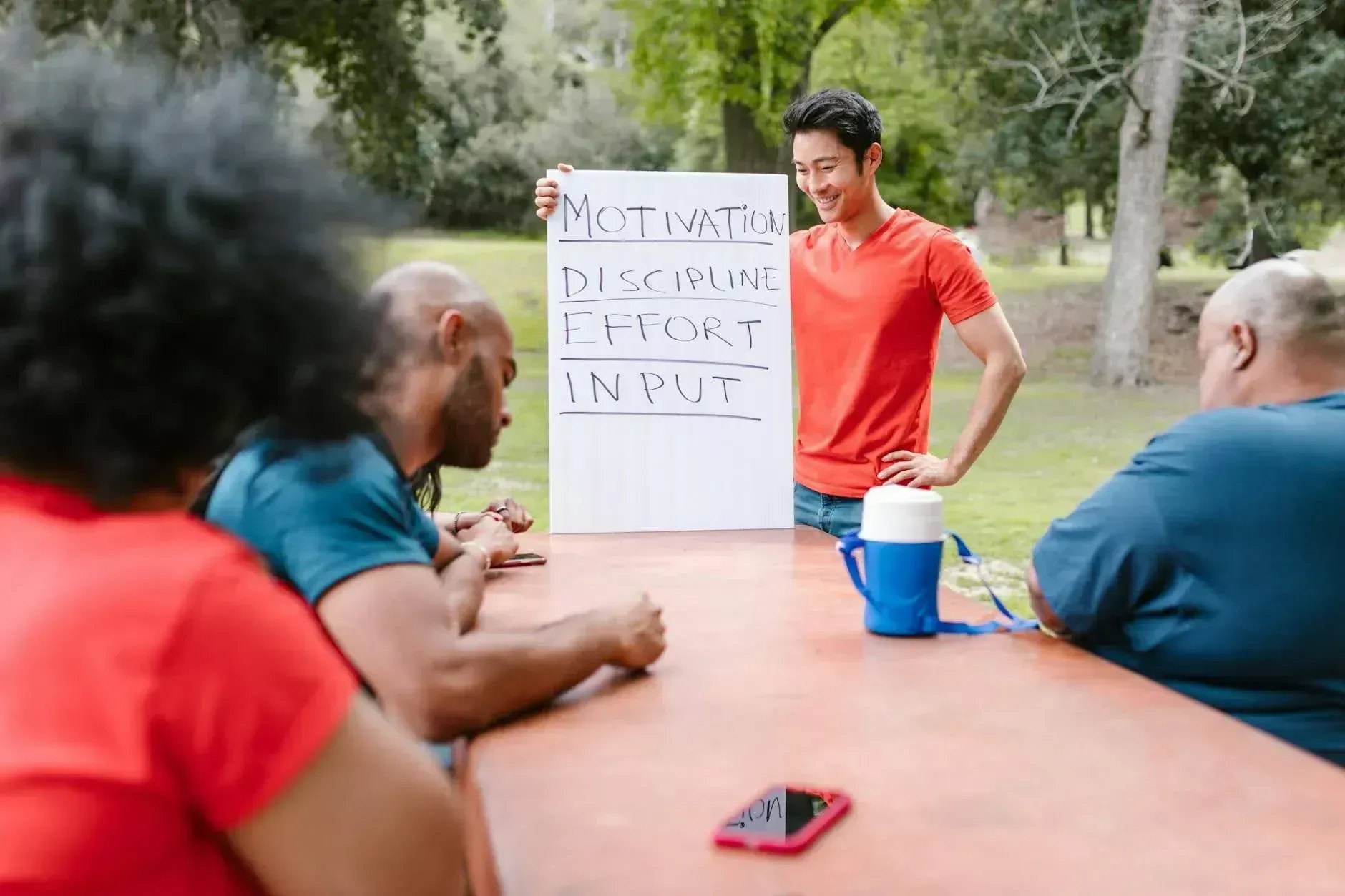
Self-awareness is not enough on its own. It needs to translate into specific, concrete development goals.
The most effective leadership development goals focus on a behaviour rather than an outcome. 'I want to improve my listening' is a behaviour goal. 'I want my team to trust me more' is an outcome goal. Behaviour is what you can directly work on.
They are specific and time-bound. 'I will hold a proper one-on-one with each direct report every two weeks for the next three months' is actionable. 'I will be a better manager' is not.
They connect to a real challenge you're currently facing. Development goals tied to live problems get practiced more consistently than abstract skill-building exercises.
Step 4: Learn From the Right People

Mentorship remains one of the most effective accelerators of leadership development, and one of the most underused.
A good mentor doesn't just share their career path. They help you think through real decisions, reflect on experiences, and develop the judgment that takes years to build through trial and error alone. Organisations with formal mentoring programmes see promotion rates up to six times higher for participants and significantly higher retention.
When seeking a mentor, look for someone whose leadership you respect but whose strengths are not identical to yours. If your natural strength is big-picture strategic thinking, a mentor who excels at execution and operational detail will challenge and expand your capabilities in ways that a mentor who thinks exactly like you won't.
Step 5: Practice in Real Situations
Leadership skills solidify in practice, not in preparation. The most effective development happens when you take on challenges that are slightly beyond your current comfort zone.
Ways to practice leadership in real situations:
Volunteer to lead a cross-functional project where you have to influence without positional authority.
Facilitate a team meeting where there's genuine tension or disagreement, and resist the urge to smooth it over prematurely.
Delegate a project you'd normally handle yourself, then follow up through coaching questions rather than checking in on every task.
Ask to present your team's work to senior leadership before you feel completely ready. Each of these creates a feedback loop: you act, you observe what happens, you reflect, and you adjust. That cycle, repeated over time, is how leadership capability actually builds.
Step 6: Get Structured Coaching and Feedback
Mentorship provides perspective. Coaching provides accountability and structure. A skilled leadership coach helps you see patterns in your behaviour that are difficult to spot from the inside, work through specific leadership challenges with someone who asks the right questions rather than giving you the answers, build accountability to follow through on the development work between sessions, and accelerate progress through structured reflection that you're unlikely to create on your own.
The research on the effectiveness of coaching for leadership development is consistent. Leaders who work with a coach develop faster, retain more of what they learn, and apply it more consistently than those relying on self-directed development alone.
Conclusion On Developing Leadership Skills
At Strengths School Hong Kong™, our approach to leadership development is built around the principle that the fastest path to great leadership runs through your strengths, not around them.
Our leadership programmes for managers and executives in Hong Kong integrate Gallup's CliftonStrengths framework with practical, real-world application. Participants leave with a clear picture of how they're naturally wired as leaders, a development plan built from that foundation, and the tools to keep building long after the programme ends.
We work with leaders across Hong Kong's MNCs, large enterprises, and government bodies, from first-time managers navigating their first leadership role to senior executives shaping organisational direction.
If you're looking to develop your team's leadership capability at a broader organisational level, our programmes for organisations offer a scalable, evidence-based approach to building leadership from the inside out.
Frequently Asked Questions: How to Develop Leadership Skills
How Do You Develop Leadership Skills?
Developing leadership skills requires a combination of self-awareness, deliberate practice, feedback, and structured coaching. Start with an honest assessment of where you are now, identify the specific skills you need to develop, practice them in real situations, and seek feedback to understand what's working and what isn't. Coaching and mentorship significantly accelerate the process.
Can Leadership Skills Be Learned, Or Are Leaders Born?
Leadership skills can absolutely be learned. While personality traits and natural strengths influence leadership style, the core skills that make someone an effective leader, including communication, decision-making, emotional intelligence, and coaching others, are all developable with intentional effort. Research consistently shows that the most effective leaders are those who commit to continuous development, regardless of their starting point.
What Is The Fastest Way To Develop Leadership Skills?
The fastest path combines three elements: understanding your natural strengths so you build from what already works, practicing in real high-stakes situations so skills embed through experience, and working with a coach or mentor so you have structured feedback and accountability. Programmes that integrate all three produce faster, more lasting development than training alone.
How Do I Develop Leadership Skills As A New Manager?
As a new manager, start by building self-awareness through an assessment like CliftonStrengths or a 360-degree feedback process. Focus on developing the core skills of communication, delegation, and feedback delivery first, since these affect your team most directly. Seek out a mentor who has navigated the manager transition and consider working with a leadership coach to accelerate your learning curve.
Why Is Leadership Development Important For Organisations In Hong Kong?
Hong Kong's corporate environment demands leaders who are agile, culturally intelligent, and capable of leading diverse, high-performing teams across complex organisational structures. Investing in leadership development builds an internal talent pipeline, reduces reliance on external hires for senior roles, improves employee engagement and retention, and creates the organisational resilience needed to navigate a fast-changing business environment.
What Role Does Self-Awareness Play In Leadership Development?
Self-awareness is the foundation of all effective leadership development. Before you can improve how you lead others, you need an accurate picture of how you currently show up: what you do well, what your blind spots are, and how your behaviour impacts the people around you. Research consistently shows that leaders with higher self-awareness are more effective, make better decisions, and build stronger relationships with their teams.
Next Next