
How To Develop Leadership Skills: Build Confidence In 5 Steps
Dec 9 Written By Jason Ho
Becoming a good leader takes time and practice. You do not wake up one day and suddenly know how to guide people or make big decisions. Leadership grows slowly through habits, self-awareness and simple skills that you build little by little. The good news is that anyone can learn these skills if they stay patient and keep improving themselves.
In this guide, you will learn what leaders actually do, what qualities matter most and what actions you can practice every day to get better. You will also learn practical tips that make you feel more confident when you lead. These steps are simple enough for young readers yet useful enough for adults who want to become stronger leaders at home, in school or at work.
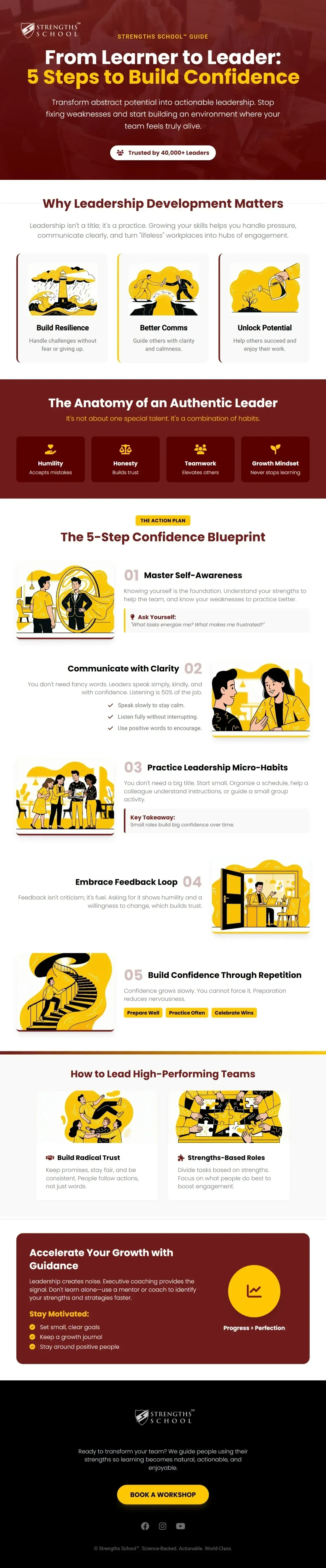
5 Steps On How To Develop Leadership Skills

Now that you know the qualities of a leader, let us look at the steps you can take to strengthen your leadership ability. These steps are simple and anyone can follow them at their own pace.
Step One: Understand Yourself Better
Knowing yourself is the first step to becoming a leader. This includes knowing your strengths and your weaknesses. When you understand what you are good at, you can use it to help your team. When you know what you struggle with, you can practice and get better.
You can do this by asking yourself questions like
What tasks do I enjoy
What makes me frustrated
What do people often ask me for help with
What do I want to improve in myself
Self awareness will make you more confident because you understand why you act or feel a certain way. It is also the foundation of strengths-based leadership, which means you lead by using your strongest qualities instead of forcing yourself into something that does not fit your natural abilities.
Step Two: Learn How To Communicate Clearly
Leaders talk simply and clearly. This helps other people understand the goal and the plan. You do not need fancy words. You only need to speak kindly and with confidence. Good communication also means listening well. When you listen, you show respect, and people are more willing to listen to you in return.
Try these simple habits:
Speak slowly: This helps you stay calm and think clearly.
Listen fully: Give your attention to the person speaking and do not interrupt.
Ask questions: This shows you want to understand others better.
Use positive words: Encourage people instead of bringing them down.
Communication is a big part of leadership, so practising it every day will help you grow faster.
Step Three: Practice Small Leadership Tasks
You do not need a big project to show leadership. You can start small by taking tasks that help your group. For example, you can organise a teamwork schedule or help classmates understand instructions. You can assist your teacher or volunteer to guide part of a group activity.
Small leadership roles build confidence because you get used to guiding others in a calm and simple way. Each task is a chance to learn new lessons.
Step Four: Ask For Feedback And Use It To Improve
Feedback helps you grow stronger. You can ask teachers, friends or team members what you can do better. Do not feel bad when they point out mistakes. Everyone makes mistakes, and feedback is not meant to hurt you. It is meant to help you grow into a better leader.
When you listen to feedback, you show people you are humble and willing to change. This makes others trust you more.
Step Five: Build Confidence Through Practice
Confidence grows slowly. You cannot force it. The more you practice your leadership skills, the more natural everything becomes. You gain confidence by trying even when you feel nervous.
Here are simple things that help boost your confidence:
Prepare well: When you know what you are doing, you feel less nervous.
Practice often: Repeating tasks makes you more comfortable.
Celebrate small wins: Each improvement matters.
Stay patient: Confidence takes time, so trust the process.
Confidence will grow each time you do something that once felt scary. As you practice more, you will notice big changes in the way you talk and lead.
Why Developing Leadership Matters
Being a better leader helps you in almost every part of life. You can use your skills when you work on a group project, when you play sports or even when you help your family at home. Leadership teaches you how to communicate better and how to stay calm when things go wrong. It also helps you deal with challenges without getting scared or giving up quickly.
People who grow their leadership abilities through leadership training are usually more confident because they learn how to handle pressure slowly. They also learn how to help others succeed, which makes teamwork easier and more enjoyable. When you understand how to lead, you also understand how to follow because both roles require respect and discipline.
Qualities That Help You Become A Better Leader
A leader is not great because of one special talent. A leader becomes great because of a combination of good habits and attitudes. Here are some qualities you can start building today. You do not need to master them overnight. Small continuous practice will slowly shape you into someone others trust and look up to.
Communication: A leader should not be averse to having in-depth conversations with the people they handle no matter how difficult or awkward the topic may be.
Honesty: People follow you when they know you tell the truth. Leaders stay honest even when the truth is difficult.
Humility: A leader accepts mistakes instead of blaming others. You learn from your errors and try again.
Patience: Leaders know that progress takes time. Instead of rushing or stressing out, you stay calm and let yourself learn slowly.
Confidence: Confidence grows when you practice. You build confidence by doing small tasks well and then moving to bigger ones.
Teamwork: Leaders do not work alone. They learn how to work with people who think differently and how to help everyone perform better.
Growth mindset: This means believing that you can improve with practice. Leaders never stop learning.
All these qualities will help you grow into someone who can guide others with kindness, wisdom and clarity. You can build them through everyday actions like talking openly, helping classmates, or taking the lead in small tasks.
Learning Through Real Guidance

Some people develop faster when they have someone guiding them. This could be a mentor, a teacher, or even executive coaching, where a trained coach helps you grow your leadership skills step by step. A coach gives you tools and strategies that match your personality so you learn smarter and not harder.
Leadership becomes easier when you are not learning alone. A guide can help you understand your strengths and show you how to use them in real situations. This support also helps you stay motivated, especially when things get difficult.
How To Stay Motivated While Learning To Lead
Everyone who learns leadership goes through moments of doubt. This is normal. You may feel unsure or scared of making mistakes. The important thing is not quitting. Leaders push through challenges even when they feel nervous.
These habits help you stay motivated:
Set small goals: It is easier to stay motivated when your goals are simple and clear.
Learn from other leaders: Watch how good leaders talk, act and solve problems.
Keep a growth journal: Write down what you learned each day and the progress you made.
Stay around supportive people: Positive people make your journey easier.
When you stay motivated, your growth becomes steady, and you start seeing real improvements in your confidence and leadership skills.
How To Lead With Confidence
Confidence is not about being loud or bossy. It is about knowing your purpose and speaking with clarity. Here are ways to develop strong and steady confidence as a leader.
Believe In Your Strengths
You have skills that make you unique. When you trust your strengths, you lead better. Even if you are not perfect, you still have qualities that can help others.
Accept Your Weaknesses
Leaders are not perfect. You do not need to hide your weaknesses. When you accept them, you can find ways to improve or ask for support. This makes you more authentic.
Practice Positive Self Talk
Talk to yourself the same way you would encourage a friend. This makes you calmer and more confident.
Prepare Before You Lead
Preparation brings confidence. If you know what to say or what steps to follow, you feel more ready.
Become A Leader People Trust
Trust is one of the most important parts of leadership. People follow you because they believe in your actions and your words. Here are ways to build trust with others.
Keep promises: Do what you say you will do.
Stay fair: Treat everyone with the same respect.
Speak honestly: People trust leaders who tell the truth.
Stay consistent: Be the same person every day, whether things go well or not.
When people trust you, it becomes easier to guide them through problems or challenges.
How To Become A Strong Team Leader

Leading a group can be challenging, but it is also rewarding. When you build a strong team, you help everyone succeed together. Your job as a leader is to bring out the best in each person.
Here are ways to build a supportive and strong group:
Encourage group discussions: Make sure everyone gets a chance to talk.
Divide tasks clearly: Give assignments based on each person’s strengths.
Help people feel safe: A good leader listens without judging.
Solve conflicts calmly: Guide the group back to teamwork.
Leaders who help their teams succeed gain more respect because they focus on the bigger goal rather than just their own success.
Growing From Learner To Leader
The journey from being a learner to a leader is filled with mistakes, challenges, and exciting moments. Each experience teaches you something important. You may not feel like a leader in the beginning, but small changes will slowly build your confidence.
As you grow, you start seeing situations differently. You will become more patient, calmer and more willing to listen. These traits make you a strong leader because you understand how to guide people without making them feel afraid or confused.
Growing as a leader is not about being perfect. It is about becoming better each day and using your strengths wisely. When you focus on progress instead of pressure, you grow much faster.
This is where precision over pressure becomes useful. When you focus on doing things with care instead of rushing yourself, you grow as a leader more healthily.
Conclusion On How To Develop Leadership Skills
Learning how to develop leadership skills takes time, but it is an exciting journey that teaches you so much about yourself and others. You grow through small actions like listening, communicating clearly and guiding others with kindness.
You also grow by practising confidence and believing in your strengths. As you keep learning, you will notice big improvements in the way you lead and the way you think.
If you want help developing your leadership abilities, our team at Strengths School™ is here to support you. We guide people using their strengths so learning becomes natural and enjoyable.
You can contact us anytime if you want to take the next step in becoming a more confident leader.
Frequently Asked Questions About How To Develop Leadership Skills
What Makes Someone A Good Leader?
A good leader listens well and treats people with respect. A good leader also stays calm during problems and helps the team work together. When a leader is honest and kind, people trust them more.
How Can I Get Better At Communicating With My Team?
You can communicate better by speaking clearly and listening without interrupting. Try to ask questions so you understand others better. Use simple words and make sure everyone feels safe to share ideas.
How Do I Build Confidence As A New Leader?
Confidence grows through practice. Start with small tasks and do them well. Prepare before you lead so you feel ready. Celebrate your progress, even if it is small, because each improvement makes you stronger.
What Simple Actions Can Help Me Lead Better At School Or Work?
You can lead better by being responsible and helping others when they need it. Stay organised and follow through on tasks. Be patient because good leadership takes time to grow.
How Do I Know If I Am Improving As A Leader?
You will notice improvement when you feel calmer in group situations and when people start trusting your decisions. You may also receive positive feedback from others. If you handle challenges better than before, you are growing as a leader.
Previous Previous