
12 Ways To Improve Employee Engagement For Long-Term Success
Jan 26 Written By Jason Ho
Employee engagement is one of the most important topics in modern workplaces. When people feel connected to their work, they are more motivated to learn, participate, and grow. In simple terms, engaged employees care about what they do and who they work with. This makes a big difference to long-term success.
In this article, you will learn how to improve employee engagement in a clear and practical way. We will explain what engagement means, why it matters, and what HR teams and leaders can do to improve it.
Read on to learn more!
What Is Employee Engagement?
Employee engagement describes how people feel about their work and their organisation. It shows whether employees feel interested, involved, and valued. Engagement is not just about being happy. It is about feeling motivated and willing to give effort.
Engaged employees usually understand their role and why it matters. They feel comfortable sharing ideas and asking questions. When engagement is low, employees may feel disconnected and unsure about their purpose at work.
Benefits Of Good Employee Engagement
Strong engagement brings positive results for both employees and organisations.
Higher productivity: Engaged employees focus better and complete tasks with care and attention.
Lower staff turnover: People are more likely to stay when they feel valued and supported.
Better teamwork: Engagement encourages cooperation and mutual respect.
Improved morale: A positive environment helps people feel confident and motivated.
Stronger leadership impact: Engaged teams respond better to guidance and feedback.
Long-term organisational success: Engagement supports steady growth and stability over time.
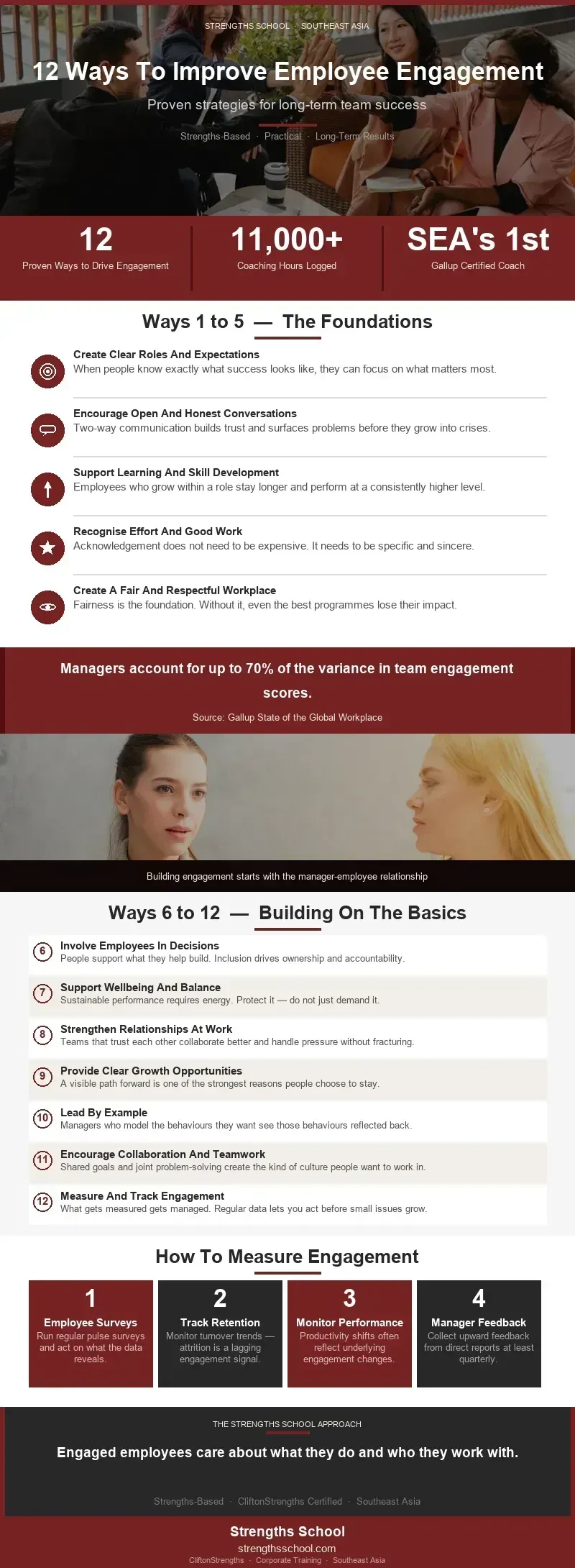
12 Ways To Improve Employee Engagement

Improving engagement takes time, effort, and consistency across the whole organisation.
1. Create Clear Roles And Expectations
Employees feel more confident when they clearly understand their role. When tasks and responsibilities are unclear, people may feel stressed or unsure about what success looks like. This often leads to mistakes or frustration, even when employees are trying their best.
Clear expectations help employees focus on what matters most. Simple job descriptions, regular check-ins, and clear goals help people understand how their work contributes to the wider organisation. When people know what is expected, they feel more secure and engaged.
2. Encourage Open And Honest Conversations
Employees should feel comfortable sharing their thoughts, ideas, and concerns. When communication only flows from the top, people may feel ignored or afraid to speak up. This can slowly reduce motivation and trust.
Regular conversations help leaders understand what employees are experiencing. For example, short weekly catch-ups can give employees a chance to raise small issues before they become bigger problems. Feeling heard makes people more willing to stay engaged.
3. Support Learning And Skill Development
Most employees want to improve and grow. When learning opportunities are limited, work can start to feel repetitive. This can cause boredom and reduce interest over time.
Offering training, workshops, or mentoring shows employees that the organisation cares about their future. Even small learning opportunities, such as shadowing a colleague or learning a new task, can boost confidence and motivation.
4. Recognise Effort And Good Work
Recognition plays a big role in engagement. When effort goes unnoticed, employees may feel that their work does not matter. This can slowly reduce enthusiasm and commitment.
Recognition does not need to be formal or expensive. A simple message saying well done or public praise during a meeting can make employees feel appreciated. When people feel valued, they are more likely to stay engaged and motivated.
5. Create A Fair And Respectful Workplace
Fairness is essential for engagement. Employees need to feel that rules and decisions apply to everyone equally. When people see unfair treatment, trust can quickly disappear.
Respectful behaviour should be encouraged at all levels. This includes listening to different opinions and treating everyone with dignity. A fair environment helps employees feel safe and respected at work.
6. Involve Employees In Decisions
Employees feel more engaged when they are involved in decisions that affect their work. Being left out can make people feel powerless or unimportant.
This does not mean every decision needs group approval. Simple actions like asking for feedback or ideas can make a big difference. When employees see their input being considered, they feel more connected to the organisation.
7. Support Wellbeing And Balance
Employees are more engaged when they feel healthy and supported. Long hours and constant pressure can lead to burnout, which reduces motivation and focus.
Encouraging regular breaks, realistic workloads, and time off helps employees recharge. A balanced approach shows that the organisation values people, not just results.
8. Strengthen Relationships At Work
Positive relationships make work more enjoyable. When employees feel connected to their colleagues, they are more likely to cooperate and support each other.
Simple activities such as team lunches or group projects can help people bond. Strong relationships reduce conflict and improve daily experiences at work.
9. Provide Clear Growth Opportunities
Employees want to know where they are heading. When there is no clear future, engagement can drop. People may feel stuck or unsure about their progress.
Clear pathways for advancement help employees stay motivated. This could include promotions, new responsibilities, or personal development goals. Knowing there is room to grow keeps people engaged over time.
10. Lead By Example
Leaders set the tone for engagement. Their behaviour influences how employees feel about the organisation. If leaders show commitment and respect, employees are more likely to do the same.
Simple actions like being on time, listening carefully, and keeping promises matter. When leaders act consistently, employees feel more confident and engaged in their work.
11. Encourage Collaboration And Teamwork
This fits naturally with engagement because people feel more motivated when they are part of a connected, cooperative team. You can explain how fostering collaboration, promoting a strong team culture, and improving team communication can make employees feel included and valued. You could also give examples like cross-department projects, brainstorming sessions, or small team challenges to show practical ways to boost teamwork and engagement.
12. Measuring And Tracking Employee Engagement
This section would show readers how to know whether engagement efforts are working. You can break it into subheadings like:
Use Employee Surveys: Explain how regular surveys provide measurable insights and help identify trends.
Track Retention And Turnover: Show how engagement affects whether employees stay or leave.
Monitor Productivity and Performance: Demonstrate that motivated employees usually perform better.
Collect Feedback From Managers: Managers notice team morale and can share observations.
Use Engagement Metrics Over Time: Explain the importance of comparing results across months or years to track progress.
Employee Engagement Activities

The right activities can help employees feel part of a team. Here are some of the employee engagement activities you can try:
Team Building Exercises
Team building exercises help employees get to know each other better and build trust. Simple activities like problem-solving challenges, group games, or indoor team building activities can strengthen collaboration and make work more enjoyable. Regular exercises create bonds that improve teamwork in day-to-day tasks.
For example:
Escape Room Challenges – Groups solve puzzles under time pressure to strengthen collaboration.
Office Trivia Games – Fun quizzes about the workplace or employees encourage teamwork and laughter.
Group Problem-Solving Tasks – Small teams work on challenges related to work or creative tasks.
Trust Falls or Blindfold Exercises – Activities that build trust and reliance among team members.
Outdoor Adventure Days – Activities like hiking, sports, or obstacle courses that promote teamwork.
Recognition And Appreciation Events
Events focused on recognition allow employees to celebrate achievements and feel valued. This can include award ceremonies, shout-outs during meetings, or milestone celebrations. Publicly acknowledging effort motivates employees and reinforces a positive workplace culture.
For example:
Employee Of The Month Program – Recognise outstanding contributions monthly.
Peer-to-Peer Shout-Out Boards – Employees post compliments and thank-yous for colleagues.
Team Milestone Celebrations – Celebrate project completions or department achievements with small events.
Surprise Appreciation Gifts – Small tokens like coffee vouchers or personalised notes show recognition.
Recognition Ceremonies – Formal or informal gatherings highlighting contributions and achievements.
Learning And Development Workshops
Workshops or skill-building sessions encourage employees to grow and improve. This can include training on soft skills, leadership qualities, or role-specific knowledge. Learning together not only improves performance but also fosters a sense of progress and engagement within the team.
For example:
Soft Skills Training Sessions – Workshops on communication, problem-solving, or emotional intelligence.
Leadership Development Programs – Focused training for emerging leaders to strengthen leadership qualities.
Lunch-and-Learn Seminars – Short presentations on useful topics during lunch breaks.
Cross-Training Opportunities – Employees learn skills from other departments to expand knowledge.
Mentoring and Coaching Sessions – Pairing employees with experienced mentors or executive coaching sessions.
Tips For Improving Employee Engagement
Small actions can make a big difference when done consistently.
Listen regularly: Check in with employees to understand how they feel and what they need.
Act on feedback: Show that employee opinions lead to real changes.
Communicate clearly: Share updates and decisions openly to reduce uncertainty.
Be consistent: Apply rules and policies fairly to everyone.
Support managers: Help leaders learn how to motivate and guide their teams.
Celebrate progress: Recognise improvements and successes, even small ones.
Conclusion On How To Improve Employee Engagement
Learning how to improve employee engagement is about building strong relationships and creating a supportive environment. When employees feel valued, trusted, and involved, engagement grows naturally. Over time, this leads to better performance, stronger teams, and long-term success.
At Strengths School™, we help organisations develop people and teams through practical learning. We believe engagement starts with understanding strengths and supporting growth. Contact us to learn how our programmes can help you build motivated and confident teams.
Frequently Asked Questions About How To Improve Employee Engagement
What Is The First Step To Improving Engagement?
The first step is listening to employees. Understanding how they feel helps organisations identify what needs to change.
How Long Does It Take To See Results?
Engagement improves over time. Small changes can show early results, but lasting improvement needs consistency.
Do Managers Affect Employee Engagement?
Yes, managers play a major role. Supportive leadership improves motivation and trust.
Can Engagement Improve Without Extra Costs?
Yes, clear communication and recognition often matter more than money.
Why Is Engagement Important For Long-Term Success?
Engaged employees stay longer, perform better, and help organisations grow steadily.
Previous Previous