
12 Employee Engagement Activities To Boost Team Motivation
Jan 27 Written By Jason Ho
Employee engagement activities are essential for creating a motivated and connected workforce. When employees feel included, valued, and recognised, they are more likely to participate actively, collaborate effectively, and contribute to the success of the organisation. Engaged employees not only perform better but also foster a positive workplace culture that attracts and retains talent.
In this article, we will explore a variety of employee engagement activities that boost team motivation. You will learn why team motivation matters, how to implement practical engagement activities, and tips to make these activities more effective.
Whether you are leading a small team or managing a large organisation, this guide will help you inspire your employees and strengthen your team culture.
Employee Engagement Activities
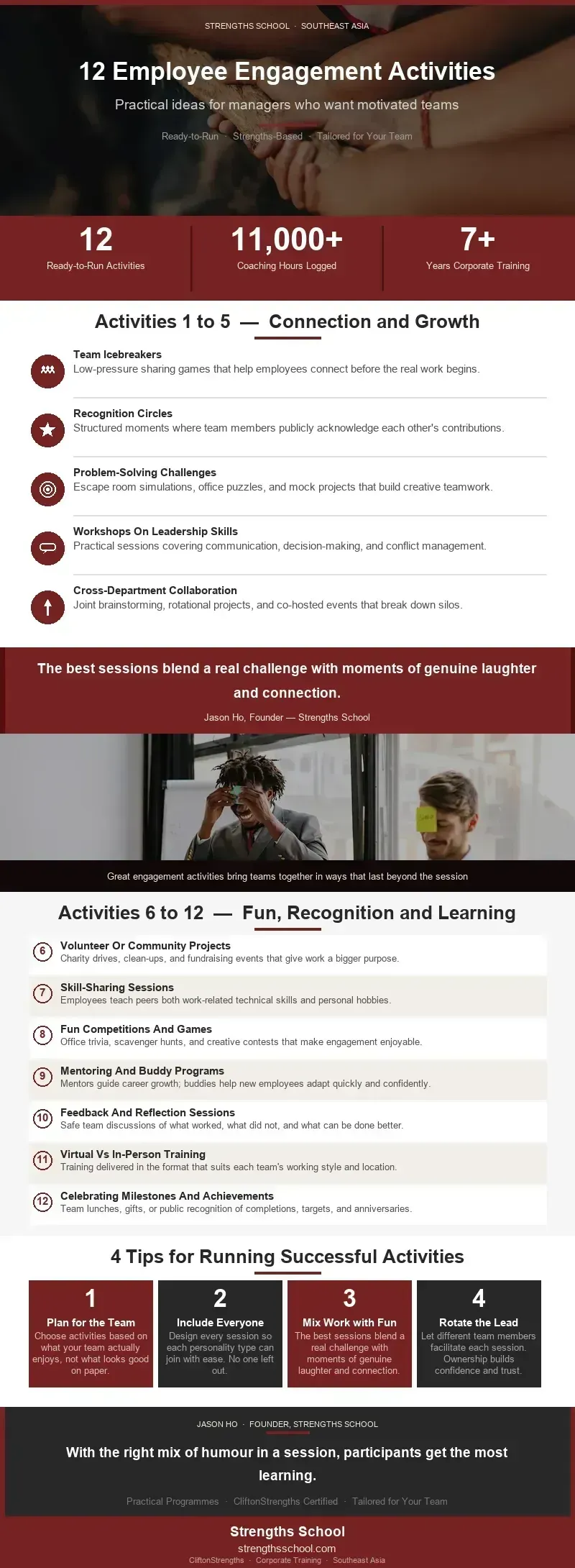
Employee engagement activities are practical ways to strengthen motivation, build trust, and improve teamwork. These activities can be done in person, virtually, or as a combination of both:
1. Team Icebreakers
Team icebreakers are activities designed to help employees get to know each other better. They work especially well with new teams or when team members have not interacted much before. Icebreakers reduce tension and create a sense of openness and friendliness in the workplace.
Simple examples include “two truths and a lie,” sharing favourite hobbies, or telling a short story about a recent experience. Icebreakers encourage employees to speak up, which can improve participation in meetings and group projects.
Tip: Rotate icebreakers so they remain fresh and engaging. Even a quick 5-minute question at the start of a meeting can create a more relaxed and connected team atmosphere.
2. Recognition Circles
Recognition circles are sessions where team members acknowledge each other’s achievements and contributions. These meetings can be formal or informal and encourage a culture of appreciation. Employees feel valued when their efforts are noticed by their peers.
This activity can be done weekly or monthly, with each team member sharing a positive comment about a colleague’s work. Recognition circles are effective in boosting morale, fostering mutual respect, and creating a strong team culture.
Tip: Combine recognition circles with small rewards or shout-outs on company platforms to enhance the impact. Public acknowledgement often reinforces positive behaviour and motivates others to follow suit.
3. Problem-Solving Challenges
Problem-solving challenges encourage teams to work together on a task that requires creativity and critical thinking. These exercises help employees practice collaboration while tackling a fun or practical challenge.
Examples include escape room simulations, office puzzles, or a mock project where teams have to create a solution in a limited time. By working together, employees learn to communicate more effectively, share ideas, and rely on each other’s strengths.
Tip: Choose challenges that are relevant to the workplace, so employees can see how skills developed in the activity apply to real projects. Celebrate successful problem-solving to reinforce engagement.
4. Workshops On Leadership Skills
Leadership workshops are designed to develop key abilities that help employees manage tasks, projects, or teams more effectively. They benefit both emerging leaders and current managers, giving everyone the tools to guide and support their colleagues.
Workshops can include sessions on communication, decision-making, conflict management, or leadership skills. Interactive exercises, role-playing, and real-world scenarios make these sessions more engaging and memorable.
Tip: Include follow-up sessions or one-on-one executive coaching for participants. This allows employees to apply new skills and reflect on improvements in their daily work.
5. Cross-Department Collaboration Activities

Cross-department collaboration encourages employees from different teams to work together on shared projects. This breaks down silos, fosters understanding of other roles, and promotes team communication across the organisation.
Examples include joint brainstorming sessions, rotational projects, or co-hosting events. Employees learn to appreciate diverse perspectives and find creative solutions together.
Tip: Assign mixed teams for small initiatives first to ensure everyone has a voice and feels comfortable contributing. Celebrate collaborative achievements publicly to reinforce the value of working together.
6. Volunteer Or Community Projects
Community and volunteering activities give employees the chance to contribute to a meaningful cause outside the workplace. This helps build purpose and connection among team members while benefiting the community.
Examples include charity drives, local school support, environmental clean-ups, or fundraising events. Participating as a team strengthens bonds and creates shared experiences that are motivating and memorable.
Tip: Encourage employees to take turns leading or organising volunteer projects. This builds ownership, responsibility, and engagement within the team.
7. Skill-Sharing Sessions
Skill-sharing sessions allow employees to teach or demonstrate skills to their peers. These can be work-related, such as technical or software skills, or personal, like hobbies or crafts.
This approach builds confidence in employees and allows everyone to learn from each other. Skill-sharing also fosters respect for the diverse talents within the team and encourages collaboration.
Tip: Make sessions short and interactive. Even 15–20 minutes once a week can provide ongoing learning and strengthen team cohesion.
8. Fun Competitions And Games
Games and competitions make engagement fun while encouraging teamwork. They allow employees to step away from daily routines and bond through playful challenges.
Examples include office trivia, scavenger hunts, or creative contests. Friendly competition motivates employees, boosts energy, and encourages participation without pressure.
Tip: Mix physical and mental games so everyone can contribute according to their strengths. Consider small prizes or recognition to make participation more rewarding.
9. Mentoring And Buddy Programs
Mentoring and buddy programs pair employees to support growth, learning, and workplace integration. Mentors provide guidance, while buddies help new employees adapt to the team culture quickly.
These programs strengthen relationships, build confidence, and encourage knowledge sharing. They are particularly effective in fostering engagement among new hires or junior staff.
Tip: Rotate mentors periodically to allow different employees to experience leadership roles and build connections across the organisation.
10. Feedback And Reflection Sessions
Feedback and reflection sessions allow teams to discuss successes, challenges, and potential improvements. Open discussions help employees feel heard and valued while encouraging continuous growth.
Structured questions and a safe environment ensure feedback is constructive. Over time, these sessions can turn conflict into collaboration, as employees learn to address issues respectfully and cooperatively.
Tip: Combine reflection with recognition to balance constructive criticism with positive reinforcement, maintaining morale and motivation.
11. Virtual Vs In-Person Training
Training can be conducted virtually, in-person, or as a hybrid, depending on the needs of the team. Both methods have advantages: in-person sessions encourage direct interaction, while virtual training offers flexibility.
Interactive tools, breakout rooms, and live polls keep virtual sessions engaging. In-person workshops provide hands-on learning and deeper personal connections. Mixing both approaches ensures engagement across different work styles and locations.
Tip: Encourage participants to share insights from virtual sessions with colleagues. This extends the learning impact and reinforces team collaboration.
12. Celebrating Milestones And Achievements
Celebrating achievements reinforces positive behaviour and motivates employees. This includes recognising project completions, sales targets, or anniversaries within the team.
Simple celebrations, such as team lunches, small gifts, or public announcements, make employees feel appreciated and part of a collective success. Recognising milestones encourages employees to continue performing well.
Tip: Include employees in planning celebrations to increase participation and make events more meaningful. Tailor celebrations to suit team preferences for maximum impact.
Importance Of Having Good Team Motivation
Good team motivation is the foundation of employee engagement and organisational success. Motivated employees work harder, collaborate better, and stay committed to long-term goals. Here are some key reasons why motivation matters:
Higher Productivity: Motivated teams complete tasks efficiently and with better quality. Engaged employees invest energy into doing their best work.
Improved Retention: Employees who feel motivated are less likely to leave the organisation. This reduces turnover costs and maintains team stability.
Stronger Team Collaboration: Motivated employees communicate and cooperate better, which strengthens bonds and enhances teamwork.
Positive Workplace Culture: Motivation encourages enthusiasm and optimism, which spreads across the team. A positive environment attracts new talent.
Enhanced Innovation: Motivated teams are more likely to share ideas and take initiative, which leads to creative solutions.
Better Customer Outcomes: Employees who are engaged and motivated deliver higher-quality service, improving client satisfaction and loyalty.
Tips For Doing Engagement Activities

Engagement activities work best when implemented thoughtfully. Here are practical tips to ensure success:
Plan Activities Around Team Interests: Tailor events to what employees enjoy to increase participation and motivation.
Include Everyone: Make sure all team members can participate, regardless of role, department, or location.
Mix Work And Fun: Combine learning and development with enjoyable experiences to maintain energy and enthusiasm.
Encourage Feedback: Ask employees what they liked or disliked about activities to improve future sessions.
Celebrate Small Wins: Recognising minor achievements keeps motivation high and encourages continued participation.
Rotate Leadership: Allow different employees to lead activities or sessions, which fosters leadership skills and engagement.
Conclusion On Employee Engagement Activities
Employee engagement activities are not just about fun, they create connections, improve motivation, and foster a strong team culture. When done consistently, these activities boost morale, collaboration, and long-term organisational success.
At Strengths School™, we help teams grow through practical engagement strategies and tailored programmes. We focus on helping organisations understand strengths, build confidence, and improve teamwork.
Contact us to learn how our programmes can inspire your employees and improve motivation.
Frequently Asked Questions About Employee Engagement Activities
What Are Employee Engagement Activities?
Employee engagement activities are structured events or exercises designed to increase motivation, strengthen team bonds, and improve workplace satisfaction. They can be done in-person or online.
How Often Should Engagement Activities Be Done?
It depends on the team and organisation. Regular activities, such as monthly or quarterly, maintain momentum and keep employees connected and motivated.
Can Small Teams Benefit From Engagement Activities?
Yes, even small teams can benefit. Simple activities like peer recognition or mini challenges create trust and collaboration while boosting morale.
Do Engagement Activities Work For Remote Teams?
Absolutely. Virtual engagement activities, like online workshops or interactive games, allow remote teams to participate and feel included.
What Are The Most Effective Activities For Long-Term Motivation?
Activities that combine recognition, skill development, collaboration, and fun are most effective. The key is consistency, variety, and follow-up to reinforce positive behaviour.
Previous Previous