
Employee Engagement Benefits Every Manager Must Know
Jan 28 Written By Jason Ho
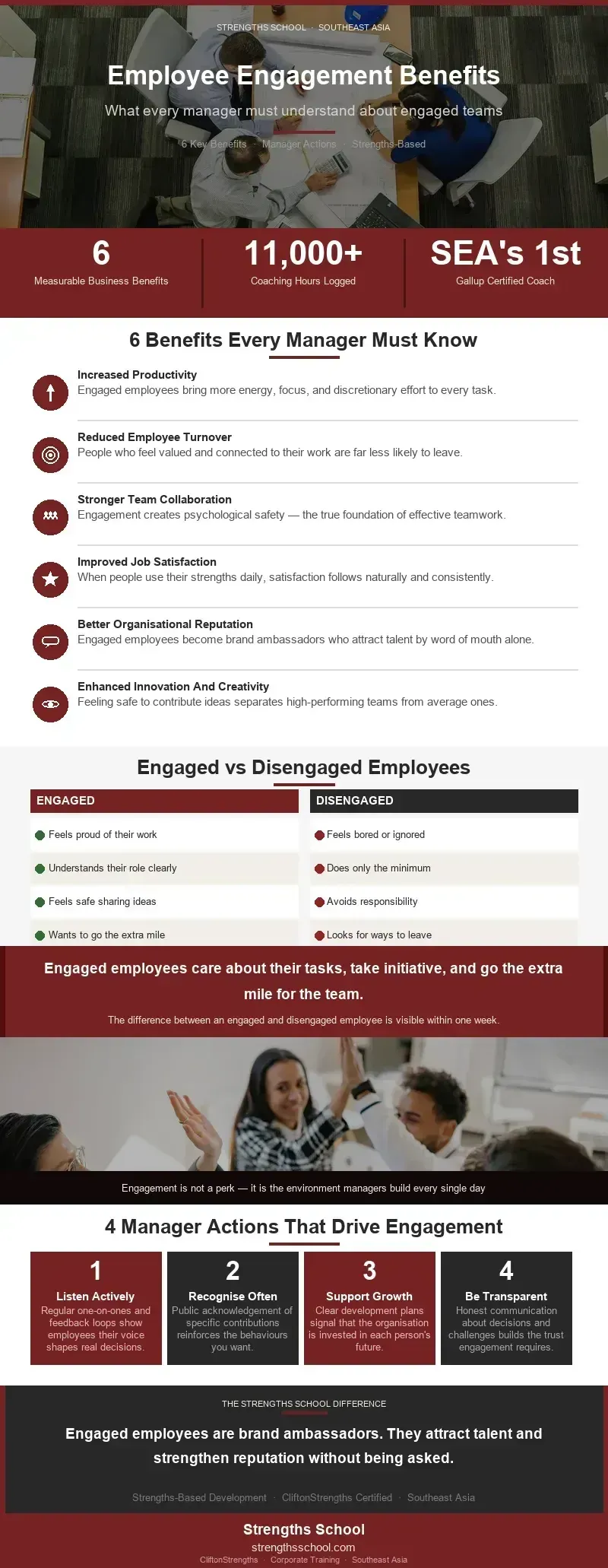
Employee engagement is more than just a buzzword in modern workplaces. It refers to the level of commitment, enthusiasm, and motivation employees feel towards their work and organisation. Engaged employees care about their tasks, take initiative, and are willing to go the extra mile to achieve team goals. This makes engagement essential for both individual and organisational success.
In this article, we will explore the key benefits of employee engagement that every manager should understand. We will highlight why engagement matters, the positive outcomes it brings, and practical ways to foster it in your team.
What Is Employee Engagement?
Employee engagement is the emotional and professional investment employees make in their work. It is different from job satisfaction or happiness. While an employee might like their job, true engagement involves dedication, focus, and a willingness to contribute beyond basic responsibilities.
Engagement includes understanding one’s role, feeling valued, and believing that work has purpose. Employees who are engaged usually have higher motivation, are more proactive, and are less likely to leave the organisation. Managers play a key role in creating conditions that inspire this kind of commitment.
Importance Of Employee Engagement
Employee engagement is not only beneficial for employees but also for managers and organisations. High engagement leads to better performance, stronger relationships, and a more positive work culture.
Higher Productivity: Engaged employees complete tasks efficiently and with care. Their energy and focus drive better results across projects.
Lower Turnover: Employees who feel connected to their work are more likely to stay. This reduces recruitment and training costs while maintaining team continuity.
Improved Team Collaboration: Engaged employees communicate openly, share ideas, and cooperate effectively, creating stronger teams.
Positive Work Culture: Engagement fosters optimism, support, and mutual respect, which attracts and retains talent.
Innovation And Creativity: Motivated employees are more likely to suggest new ideas, improving processes and solutions.
Better Customer Satisfaction: Engaged employees provide superior service and are more committed to client needs, which improves loyalty.
6 Benefits Of Employee Engagement

High employee engagement has many tangible and intangible benefits for managers, teams, and organisations. Below, we explore the top benefits that every manager should know.
1. Increased Productivity
Engaged employees are more focused and driven to meet their goals. They take pride in their work, which leads to higher-quality outcomes and faster completion of tasks.
For managers, this means projects are delivered more efficiently and with fewer mistakes. Encouraging teams to lead with confidence in their roles allows them to take ownership of tasks and perform better consistently.
2. Reduced Employee Turnover
One of the biggest challenges managers face is retaining talent. Employees who feel engaged are less likely to seek opportunities elsewhere.
High engagement builds loyalty and strengthens relationships within teams. It also reduces the disruption caused by frequent hiring and training cycles, saving time and resources.
3. Stronger Team Collaboration
Engaged employees actively participate in team discussions and projects. They share ideas, support colleagues, and work together to solve problems.
Collaboration improves overall results and reduces workplace tension. Managers can further promote teamwork by recognising contributions and facilitating activities that improve soft skills like communication and empathy.
4. Improved Job Satisfaction
When employees are engaged, they feel valued and recognised for their work. This boosts job satisfaction and morale, creating a positive cycle of motivation and performance.
Managers can reinforce satisfaction by providing feedback, celebrating achievements, and allowing employees to take ownership of meaningful tasks. High satisfaction also encourages employees to mentor peers and support team goals.
5. Better Organisational Reputation
Engaged employees are brand ambassadors. They speak positively about the organisation, which attracts talent and improves public perception.
A strong reputation helps with recruitment and encourages employees to take pride in their work. Organisations that prioritise engagement are often seen as progressive, employee-focused, and trustworthy.
6. Enhanced Innovation And Creativity
Engagement allows employees to feel confident sharing ideas. They are more willing to suggest improvements, try new methods, and take calculated risks.
Managers who create safe spaces for brainstorming and feedback foster innovation. Encouraging creativity without fear of failure strengthens problem-solving and can improve processes significantly.
Employee Engagement Activities That Boost Motivation
Employee engagement activities are practical strategies that motivate teams, foster trust, and improve collaboration. The right activities can be done in-person, virtually, or as a hybrid, depending on team needs.
1. Recognition Programs
Recognition programs highlight individual and team achievements. A simple “Employee of the Month” initiative or peer-to-peer shout-outs encourages participation and morale.
Managers can combine recognition with small rewards or public acknowledgement. This reinforces positive behaviours and motivates others to contribute actively.
2. Team-Building Workshops
Workshops allow employees to practice collaboration and problem-solving in a fun, low-pressure setting. Activities like group challenges or creative problem-solving exercises strengthen leadership styles and trust within teams.
Tip: Rotate leaders for each activity to allow everyone to develop skills and confidence.
3. Mentoring And Buddy Programs
Pairing experienced employees with new team members provides guidance and support. Mentoring strengthens relationships and improves engagement by helping employees feel supported.
This also encourages knowledge sharing and builds leadership skills in senior employees while giving newcomers a smoother start.
4. Volunteer And Community Projects
Working on community projects or charity events as a team fosters purpose and connection. Employees bond over shared goals while contributing positively to society.
Tip: Allow teams to propose and organise projects to increase ownership and engagement.
5. Skill-Sharing Sessions
Skill-sharing encourages peer learning and appreciation of diverse talents. Employees can teach each other technical skills, soft skills, or even hobbies.
Tip: Short, weekly sessions keep learning consistent and help employees develop new abilities in an interactive way.
6. Problem-Solving Challenges
Activities like office puzzles or project simulations improve collaboration and creativity. Teams learn to rely on each other’s strengths and communicate effectively.
Tip: Celebrate small wins and highlight innovative solutions to keep motivation high.
7. Icebreaker And Social Activities
Icebreakers, quizzes, or casual social events help employees feel connected. They encourage communication and reduce barriers between team members.
Tip: Rotate activities to maintain variety and engagement. Even a 5-minute icebreaker in a meeting can improve team cohesion.
8. Leadership And Development Workshops
Training sessions on communication, decision-making, or conflict management allow employees to improve leadership skills and confidence.
Tip: Encourage participants to apply lessons in daily work and share insights with peers.
9. Feedback And Reflection Sessions

Regular feedback sessions give employees a voice and encourage reflection on team performance. Constructive discussions build trust and improve collaboration.
Tip: Combine feedback with recognition to maintain morale while addressing challenges.
10. Virtual Vs In-Person Engagement
Both online and in-person activities have advantages. Virtual sessions allow flexibility, while in-person workshops provide hands-on interaction and relationship building.
Tip: A hybrid approach can maximise engagement across teams with different working preferences.
11. Celebrating Milestones
Acknowledging achievements such as project completions, anniversaries, or sales targets reinforces engagement. Simple celebrations create a positive and motivating environment.
Tip: Include employees in planning celebrations to increase participation and make events meaningful.
12. Encouraging Innovation And Creativity
Creating safe spaces for ideas and experiments allows employees to feel confident contributing. Managers can foster innovation by asking for suggestions and rewarding initiative.
Tip: Document and implement feasible ideas to show employees that their input matters.
Tips For Fostering Employee Engagement
Managers can take practical steps to strengthen engagement consistently:
Listen Actively: Regularly check in with employees to understand their needs, concerns, and suggestions.
Provide Recognition: Celebrate achievements, big or small, to reinforce motivation.
Support Development: Offer training and workshops to develop skills and confidence.
Encourage Teamwork: Promote collaboration through projects, challenges, and shared goals.
Be Transparent: Communicate openly about decisions and organisational changes to build trust.
Create Safe Spaces: Foster an environment where employees can share ideas without fear of criticism.
Conclusion On the Benefits Of Employee Engagement
The benefits of employee engagement are clear and far-reaching. Engaged employees are more productive, loyal, innovative, and satisfied. They help build strong teams, improve customer satisfaction, and support organisational success over the long term.
At Strengths School™, we help organisations develop engagement strategies that create motivated, connected teams. We focus on practical approaches to building confidence, improving collaboration, and enhancing workplace culture.
Contact us to learn how our programmes can help your employees thrive.
Frequently Asked Questions About the Benefits Of Employee Engagement
What Are The Benefits Of Employee Engagement?
The benefits of employee engagement include higher productivity, improved morale, better teamwork, and increased retention. Engaged employees contribute more actively to organisational goals.
How Can Managers Improve Engagement?
Managers can improve engagement by recognising achievements, supporting professional development, fostering communication, and creating a positive culture. Small, consistent actions make a difference.
Do Engagement Programs Work For Gen Z At Work?
Yes, engagement programs are effective for Gen Z. They value meaningful work, feedback, development opportunities, and social connection in the workplace.
Why Is Engagement Important For Organisational Success
Engagement drives performance, innovation, and customer satisfaction. Organisations with engaged employees often experience stronger growth and higher retention.
What Activities Are Most Effective For Engagement?
Activities that combine recognition, collaboration, learning, and fun are most effective. Regular engagement activities strengthen trust, motivation, and team culture.
Previous Previous