
Employee Engagement Survey Questions Every HR Team Must Use
Jan 29 Written By Jason Ho
Employee engagement matters more than ever. When employees feel heard, valued, and supported, they perform better, stay longer, and contribute more in class, at work, or in any organisation. For HR teams, one of the most effective ways to understand how employees truly feel is by using well-designed employee engagement survey questions.
This article walks you through what employee engagement really means, why surveys are important, and which questions every HR team should be asking.
Let’s get started!
What Employee Engagement Really Means
Employee engagement is about how people feel about their work and the place where they work. It is not just about being happy. It is about feeling motivated, trusted, and connected.
An engaged employee:
Feels proud of their work
Understands their role
Feels safe sharing ideas
Wants to do their best
A disengaged employee:
Feels bored or ignored
Does only the minimum
Avoids responsibility
Look for ways to leave
This is why HR teams cannot guess engagement levels. They need to ask. And the best way to ask is through employee engagement survey questions that are clear and honest.
Why Employee Engagement Survey Questions Matter
They Give Employees A Safe Voice
Employee engagement survey questions allow employees to share their thoughts without fear. Not everyone feels comfortable speaking up in meetings or talking directly to managers. Surveys create a private space where people can be honest about their experiences at work.
When employees feel safe to speak openly, HR teams gain more accurate insights. This honesty helps organisations understand real issues instead of relying on guesses or assumptions.
They Help Identify Problems Early
Small problems can quickly grow if they are ignored. Engagement surveys help HR teams spot concerns before they become serious. This could include workload issues, poor communication, or a lack of support.
By identifying these concerns early, organisations can act faster. Early action reduces frustration and helps maintain a healthier work environment.
They Improve Trust Between Employees And Management
When employees are asked for feedback, they feel valued. It shows that the organisation cares about their opinions and wants to improve. This simple act can strengthen trust over time.
Trust grows even more when employees see changes based on their feedback. It proves that their voices matter and that leadership is willing to listen and respond.
They Support Better Decision Making
Decisions based on real data are stronger than those based on assumptions. Engagement survey results give HR teams clear evidence of what employees need and expect.
With this information, leaders can make smarter choices about policies, training, and workplace improvements. Better decisions lead to better outcomes for everyone.
They Help Build A Stronger Workplace Culture
Workplace culture is shaped by daily experiences. Surveys help reveal how employees truly feel about teamwork, respect, and fairness within the organisation.
Understanding these feelings allows HR teams to strengthen positive behaviours and address negative ones. Over time, this creates a culture where employees feel motivated, supported, and proud to belong.
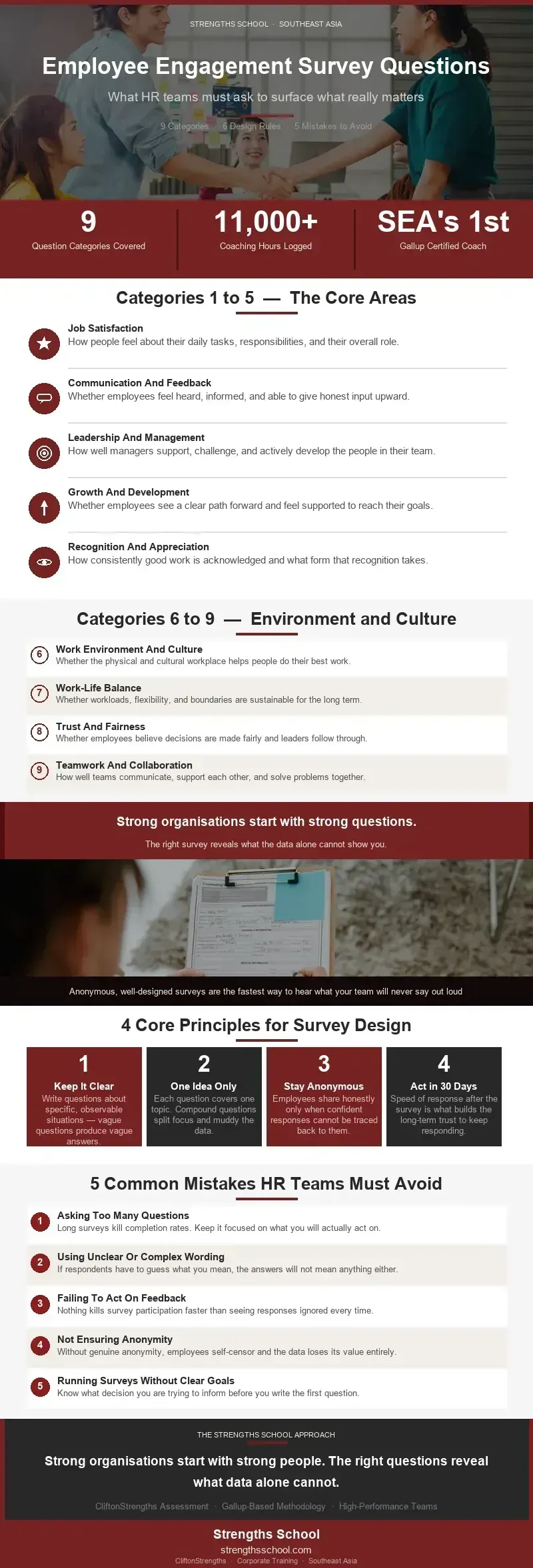
How To Design Effective Employee Engagement Survey Questions

Designing the right questions helps you collect honest feedback that leads to meaningful improvements.
Keep the language simple: Use clear and easy words so every employee understands the question without confusion.
Focus on one idea per question: Asking one thing at a time helps employees answer accurately and honestly.
Avoid leading questions: Questions should not push employees toward a specific answer or opinion.
Make responses anonymous: Anonymity encourages openness and reduces fear of negative consequences.
Use a mix of question types: Combining scale-based and open-ended questions gives you both data and personal insights.
Keep the survey short and focused: Respect employees' time by asking only questions that truly matter.
Employee Engagement Questions
Questions About Job Satisfaction
Job satisfaction is the foundation of engagement. If people do not enjoy their daily tasks, it is hard for them to stay motivated.
Ask questions that help you understand how employees feel about their work.
How satisfied are you with your current role? This helps HR understand if employees enjoy what they do every day.
Do you feel your work is meaningful? Meaningful work increases motivation and commitment.
Do you feel your skills are used well? Employees want to feel useful and valued.
Are your daily tasks clear to you? Confusion leads to frustration and mistakes.
These questions give insight into whether employees feel comfortable and confident in their roles.
Questions About Communication And Feedback
Communication plays a big role in engagement. Employees need clear instructions and regular feedback.
Do you receive clear information from management? This checks if messages are understood.
Do you feel comfortable asking questions? This shows whether the environment feels safe.
Do you receive helpful feedback on your work? Feedback helps people grow and improve.
Are you informed about changes that affect you? Sudden changes can reduce trust.
Strong communication supports teamwork and reduces stress.
Questions About Leadership And Management
Leadership has a direct impact on how employees feel. Managers influence motivation, confidence, and trust.
Do you trust your manager? Trust is key to engagement.
Does your manager support your growth? Employees want guidance and encouragement.
Do leaders set a good example? Behaviour matters more than words.
Do leaders listen to employee concerns? Feeling heard builds loyalty.
Understanding leadership qualities helps HR teams see whether leaders are supporting or blocking engagement.
Different leadership styles can affect teams in different ways. Some employees prefer guidance. Others prefer independence. Surveys help HR understand what works best.
In some organisations, servant leadership creates strong engagement because leaders focus on supporting employees rather than controlling them.
Questions About Growth And Development
People want to learn and improve. When growth stops, engagement drops.
Do you have opportunities to learn new skills? Learning keeps work interesting.
Do you see a future for yourself here? Career paths increase retention.
Do you receive support for personal development? Support shows investment in employees.
Are training opportunities fair and accessible? Fairness builds trust.
Growth-focused questions show whether employees feel stuck or inspired.
Questions About Recognition And Appreciation
Feeling appreciated makes a big difference. Small recognition can have a huge impact.
Do you feel recognised for your efforts? Recognition boosts morale.
Is praise given fairly? Fairness prevents resentment.
Does recognition motivate you? Different people value recognition differently.
Do you feel valued as a person? Feeling valued builds emotional connection.
Recognition does not always mean rewards. Sometimes, a simple thank you is enough.
Questions About Work Environment And Culture
The work environment affects daily experiences. Culture shapes how people treat each other.
Do you feel safe at work? Safety is essential.
Do you feel respected by colleagues? Respect supports teamwork.
Does the organisation promote inclusion? Inclusion encourages belonging.
Do you enjoy working with your team? Positive relationships improve engagement.
Team based activities like indoor team building activities can strengthen bonds and improve communication when done thoughtfully.
Questions About Work-Life Balance
Balance is important for mental and physical health. Burnout reduces engagement quickly.
Do you feel your workload is manageable? Too much work causes stress.
Are you able to disconnect after work? Rest improves performance.
Does the organisation respect personal time? Respect builds trust.
Do you feel supported during stressful periods? Support prevents burnout.
Work-life balance questions show whether employees feel cared for or overwhelmed.
Questions About Trust And Fairness
Trust holds organisations together. Without it, engagement falls apart.
Do you feel decisions are made fairly? Fairness matters.
Do you trust company policies? Clear policies reduce confusion.
Are rules applied equally? Equality builds respect.
Do you feel safe reporting issues? Safety encourages honesty.
Trust-based questions help HR identify hidden issues before they grow.
Questions About Teamwork And Collaboration
People rarely work alone. Teamwork affects productivity and satisfaction.
Do team members support each other? Support strengthens teams.
Is collaboration encouraged? Collaboration improves results.
Do conflicts get resolved properly? Unresolved conflict harms morale.
Do you feel included in team decisions? Inclusion builds commitment.
Strong teamwork relies on good interpersonal skills that allow people to communicate clearly and respectfully.
Common Mistakes HR Teams Should Avoid

Even well-intentioned surveys can fail if common mistakes are not avoided.
Asking too many questions: Long surveys feel overwhelming and reduce completion rates and response quality.
Using unclear or complex wording: Confusing questions lead to inaccurate answers and frustration.
Failing to act on feedback: When employees see no change, they lose trust in future surveys.
Not ensuring anonymity: Without privacy, employees may hold back honest opinions.
Running surveys without clear goals: Surveys should always have a purpose so the results lead to meaningful action.
Conclusion On Employee Engagement Survey Questions
Employee engagement survey questions help HR teams understand what employees truly feel. They give people a voice and provide clear direction for improvement. When questions are simple, honest, and followed by action, engagement grows naturally.
At Strengths School™, we believe strong organisations start with strong people. We help teams build awareness, confidence, and growth through practical learning. If you want to improve engagement and build stronger teams, we are here to help.
Contact us to learn how our programmes can support your people and your goals.
Frequently Asked Questions About Employee Engagement Survey Questions
What Are Employee Engagement Survey Questions?
They are questions designed to understand how employees feel about their work, leaders, and workplace.
How Long Should An Engagement Survey Be?
It should be long enough to gather useful insights but short enough to respect employees time.
Should Engagement Surveys Be Anonymous?
Yes. Anonymity encourages honest and open feedback.
How Do You Encourage Employees To Participate?
Explain the purpose clearly and show that feedback leads to real action.
What Should HR Do After The Survey?
HR should analyse results, share key findings, and create clear action plans based on feedback.
Previous Previous