
30 Teamwork Tips Every Team Should Know To Work Better Together
Jan 7 Written By Jason Ho
Teamwork is essential for any successful team or organisation. When everyone works together smoothly, tasks are easier, goals are reached faster, and people feel happier at work. However, building an effective team is not always simple. It requires effort, understanding, and clear teamwork tips to guide the process.
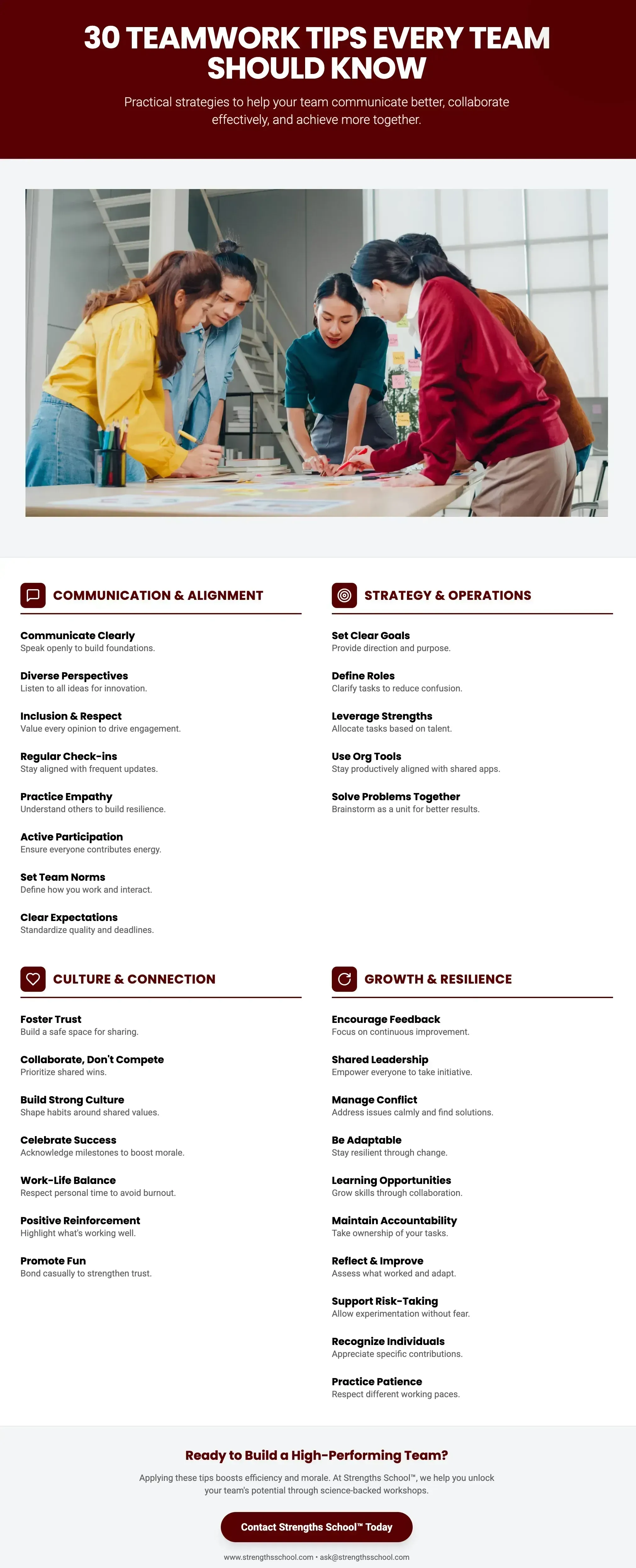
In this article, we share 30 practical teamwork tips every team should know. These tips will help you build a strong team culture, improve collaboration, and make sure everyone enjoys working together. Whether your team is large or small, new or experienced, these ideas can make a real difference.
1. Communicate Clearly And Openly
Clear communication is the foundation of a strong team. Team members should feel comfortable sharing ideas, asking questions, and discussing problems without fear of criticism. Open communication allows everyone to understand the goals and expectations of the group.
When you improve team communication, misunderstandings are reduced, and tasks get completed more efficiently. Encourage active listening, clarify doubts, and make sure everyone’s voice is heard. Teams that communicate well often achieve better results and stronger relationships.
2. Set Clear Goals
Teams work best when everyone knows what they are trying to achieve. Goals provide direction and purpose, making it easier to measure progress and celebrate milestones. Each team member should know how their role contributes to the larger objective.
Clear goals help maintain focus and reduce confusion. When team members understand what success looks like, they are more motivated to work together. Regularly reviewing goals ensures that everyone remains aligned.
3. Define Roles And Responsibilities
Clearly defined roles prevent confusion and reduce conflicts. Each team member should understand their tasks and how they fit within the team. This clarity allows members to focus on their strengths and contribute effectively.
Defining responsibilities also helps leaders provide support where needed. It ensures accountability and prevents overlapping work, which can cause frustration. When roles are clear, the team functions more smoothly and efficiently.
4. Foster Trust Within The Team
Trust is essential for collaboration. Team members who trust each other are more willing to share ideas and give honest feedback. Trust creates a safe space where people feel valued and respected.
Knowing how to build trust in a team starts with honesty and reliability. Team members should keep their promises, meet deadlines, and support one another. Trust grows over time through consistent actions and mutual respect.
5. Encourage Open Feedback
Feedback helps teams grow and improve. It allows members to understand what works well and what needs attention. Regular feedback ensures continuous learning and strengthens team performance.
Encourage a culture where feedback is constructive and supportive. Focus on actions and behaviours rather than personal traits. Open feedback helps people improve while maintaining a positive team environment.
6. Promote Collaboration, Not Competition
Collaboration helps teams achieve shared goals. Encourage members to work together, share knowledge, and support one another rather than competing against each other. Collaboration strengthens relationships and trust within the team.
While friendly competition can be motivating, prioritising cooperation ensures long-term success. Teams that collaborate effectively complete tasks more efficiently and enjoy working together.
7. Build Strong Team Culture
A positive team culture motivates and engages members. It is shaped by shared values, habits, and behaviours. Celebrating achievements, recognising effort, and maintaining respect are all part of a strong culture.
When you build a strong team culture, members feel more connected and committed. Team traditions, fun activities, and appreciation programmes create a supportive environment that encourages growth.
8. Develop Leadership Skills Across The Team
Leadership is not only for managers. Every team member can display leadership by taking initiative, guiding discussions, and helping others. This shared leadership builds confidence and resilience within the team.
Focusing on leadership skills allows members to step up when challenges arise. It encourages accountability, problem-solving, and decision-making, which strengthens the overall team performance.
9. Encourage Diverse Ideas And Perspectives
Diverse viewpoints lead to innovative solutions. Encourage members to share different ideas, even unconventional ones, to enhance creativity and problem-solving.
Listening actively to all perspectives ensures everyone feels valued. A team that embraces diversity is more adaptable and capable of addressing complex challenges effectively.
10. Recognise Strengths And Weaknesses
Understanding team members’ strengths and weaknesses improves task allocation. Leveraging strengths allows members to contribute more effectively, while support can be provided in weaker areas.
Knowing why strengths-based teams perform better helps leaders assign tasks strategically. This approach improves efficiency, satisfaction, and overall team performance.
11. Manage Conflicts Effectively
Conflict is natural in any team. What matters is how it is handled. Address disagreements calmly, listen to all sides, and focus on finding solutions.
Effective conflict management prevents resentment and maintains trust. Teams that resolve issues constructively are stronger, more cooperative, and able to work together longer.
12. Celebrate Achievements Together
Acknowledging accomplishments motivates the team. Recognising small wins and major milestones builds morale and reinforces positive behaviour.
Celebrations also strengthen team relationships. When achievements are shared, team members feel appreciated and connected, which fosters loyalty and engagement.
13. Be Flexible And Adaptable
Teams face constant changes. Encouraging adaptability ensures members can adjust to new situations without frustration. Being flexible allows the team to embrace innovation and handle unexpected challenges.
Flexibility also promotes resilience. Teams that adapt well can maintain productivity and harmony even during periods of change or uncertainty.
14. Provide Opportunities For Learning

Continuous learning benefits the team and individual members. Workshops, training, or knowledge-sharing sessions build skills while fostering collaboration.
When members learn together, they feel supported and motivated. Learning activities also improve problem-solving and communication skills across the team.
15. Encourage Accountability
Team members must take responsibility for their tasks. Accountability ensures that work is completed on time and meets standards.
Encourage people to admit mistakes and learn from them. Accountability builds reliability and trust, which are essential for successful teamwork.
16. Use Tools To Stay Organised
Organised teams are more productive. Tools like shared calendars, project management apps, and messaging platforms keep everyone aligned.
Staying organised reduces confusion and stress. It also makes tracking progress, deadlines, and responsibilities easier, ensuring the team runs smoothly.
17. Promote Inclusion And Respect
Inclusion and respect are key to a harmonious team. Ensure everyone feels their opinions are valued and that no one is left out.
Inclusive teams perform better because members are more engaged. Respectful interactions prevent conflicts and create a safe environment for sharing ideas.
18. Maintain Regular Check-Ins
Regular check-ins keep the team on track. Short meetings or updates help identify problems early and reinforce communication.
Check-ins also maintain a sense of accountability and belonging. Teams that meet regularly stay focused and aligned with their goals.
19. Encourage Work-Life Balance
Healthy teams respect personal time and promote balance. Encouraging breaks, reasonable workloads, and time off reduces burnout.
When members feel rested and supported, they are more focused and productive. Work-life balance also strengthens team relationships and overall well-being.
20. Reflect And Improve
Regular reflection allows teams to assess successes and areas for growth. Discuss what worked well and what can be improved together.
Reflection creates a culture of continuous learning. Teams that review and adapt their processes become stronger and more efficient over time.
21. Encourage Empathy
Understanding the perspectives of teammates improves collaboration. Empathy allows members to respond thoughtfully and support one another.
Empathetic teams are more cohesive and resilient. Recognising each other’s feelings builds stronger bonds and trust within the group.
22. Set Clear Expectations
Clear expectations prevent confusion and ensure everyone knows their responsibilities. Communicate deadlines, quality standards, and priorities clearly.
Setting expectations allows the team to focus on goals. It also encourages accountability, as each member knows what is expected of them.
23. Use Positive Reinforcement
Praise and recognition motivate team members. Highlighting achievements encourages people to continue performing well.
Positive reinforcement strengthens morale and reinforces desired behaviours. It also helps create a supportive and encouraging team environment.
24. Support Risk-Taking
Encourage members to share new ideas and try different approaches without fear of failure. Safe risk-taking fosters innovation and creativity.
Supporting experimentation helps the team learn and grow. Teams that embrace calculated risks often discover better solutions and improve processes.
25. Facilitate Problem-Solving Together
Collaborative problem-solving ensures multiple perspectives are considered. Brainstorming as a team produces more creative and effective solutions.
When problems are tackled collectively, members feel ownership and responsibility for outcomes. This strengthens engagement and team cohesion.
26. Encourage Active Participation

Active participation makes the team stronger. Ensure everyone contributes to discussions and activities, regardless of their role or seniority.
Encouraging participation creates a sense of belonging. It also brings more ideas and energy to the team, improving outcomes and collaboration.
27. Set Team Norms
Agreed norms guide behaviour, communication, and decision-making. Norms create a predictable environment and reduce misunderstandings.
Teams that follow clear norms are more cohesive and efficient. Everyone knows how to interact and what standards to uphold, which improves teamwork.
28. Recognise Individual Contributions
Acknowledging individual efforts complements collective achievements. Recognition encourages members to continue contributing their best.
Noticing contributions boosts morale and strengthens commitment. It also reinforces positive behaviour and builds loyalty within the team.
29. Practice Patience
Teamwork requires patience. People may work at different paces or approach tasks differently. Understanding these differences reduces frustration.
Patience encourages collaboration and understanding. Teams that are patient with one another are more cohesive and perform better in the long run.
30. Promote Fun And Connection
Including lighthearted activities or casual bonding sessions strengthens relationships. Fun reduces stress and improves morale.
When team members enjoy spending time together, trust and communication improve. Fun activities make teamwork feel enjoyable and sustainable.
Conclusion On Teamwork Tips
Implementing these teamwork tips helps teams communicate better, build trust, and achieve their goals efficiently. Teams that follow these principles are happier, more productive, and better equipped to face challenges together.
At Strengths School™, we provide programmes to help your team understand individual strengths and work better together. Our workshops and coaching sessions guide teams to communicate clearly, solve problems efficiently, and enjoy working as one.
Contact us today to plan a session for your team.
Frequently Asked Questions About Teamwork Tips
What Are The Most Important Teamwork Tips For New Teams?
New teams should focus on clear communication, goal setting, defining roles, and building trust.
How Can Teamwork Tips Improve Workplace Productivity?
Applying teamwork tips like collaboration, feedback, and accountability reduces errors and boosts efficiency.
Are Teamwork Tips Different For Small And Large Teams?
Core tips remain the same, but larger teams may require more structured communication and organisation.
How Do Teamwork Tips Help In Conflict Resolution?
They encourage open discussion, empathy, and focus on solutions rather than blame.
Can Teamwork Tips Help Remote Teams Work Better Together?
Yes. Clear roles, regular check-ins, and communication tools are especially important for remote collaboration.
Previous Previous