
30 Teamwork Skills That Improve Communication And Productivity
Jan 8 Written By Jason Ho
Teamwork is one of the most important parts of working with others. When people know how to work together, jobs become easier, tasks get finished faster, and everyone enjoys the process more. Many teams struggle not because they lack talent but because they lack the right teamwork skills. These skills help team members listen better, understand each other, share ideas, solve problems, and stay focused on the same goals.
In this guide, you will learn the most important teamwork skills that improve communication and productivity. These skills are easy to understand and can be used in any kind of team. By applying these ideas, you can create a strong team culture that encourages trust and cooperation.
Why Teamwork Skills Matter
Teamwork skills matter because they shape the way people work and communicate. Good teamwork helps reduce misunderstandings, removes confusion, and creates a smoother process for completing tasks. When people feel respected and heard, they are more willing to share ideas and stay motivated.
These skills also help build confidence within the team. When you know how to communicate and collaborate well, you feel more comfortable taking on responsibilities. This builds trust among team members and helps everyone reach their goals more efficiently.
The Link Between Teamwork Skills And Better Communication
Communication is the heart of teamwork. Without it, the group becomes confused and unproductive. When you practise teamwork skills like active listening, sharing ideas, and giving clear instructions, communication becomes smooth and natural.
A team that communicates well can face challenges together. They talk openly, understand each other’s strengths, and solve problems without arguments. This makes their work faster and more organised. With clear communication, the team avoids mistakes and keeps everyone moving in the same direction.
The Link Between Teamwork Skills And Higher Productivity
Productivity increases when the team works in a coordinated way. Teamwork skills help organise tasks, plan better, and reduce wasted time. When people understand what they need to do, they can focus more and complete their tasks faster.
Another way teamwork skills boost productivity is by reducing stress. When the team supports each other, work feels lighter. People are more willing to help, share resources, and remind each other of deadlines. This creates a team that can perform well even during busy or challenging periods.
Teamwork Skills That Improve Communication And Productivity
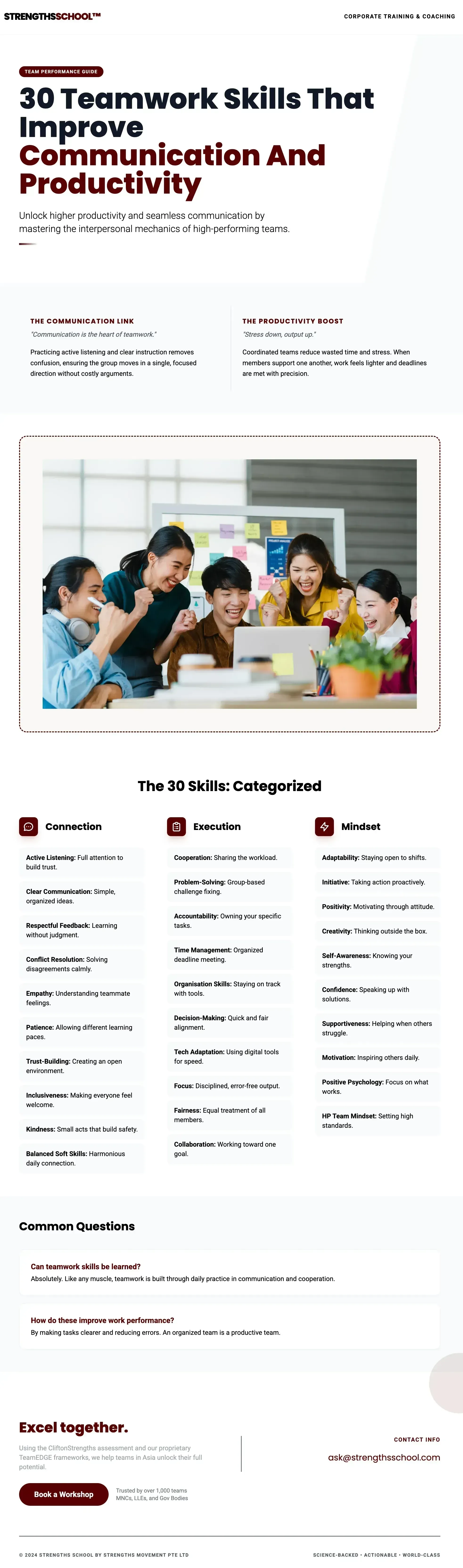
Below are the teamwork skills that matter most. Each one includes an explanation and clear examples of how it helps your team work better.
1. Active Listening
Active listening means giving full attention when someone is speaking. This helps the speaker feel heard and respected. When people listen carefully, they avoid misunderstandings and can respond clearly.
Active listening also builds trust within the team. It shows that you care about your teammate’s thoughts. When everyone listens actively, the team becomes more cooperative and less likely to argue.
2. Clear Communication
Clear communication means expressing ideas, questions, and instructions in a simple and organised way. It helps the team stay on the same page. If everyone communicates clearly, tasks are easier to complete, and mistakes happen less often.
It also helps people feel more confident. When instructions are clear, team members do not feel lost or unsure. They can complete their tasks faster and with fewer problems.
3. Respectful Feedback
Feedback is important for improvement. Giving feedback in a respectful way helps the team learn without feeling judged. It encourages growth and builds a positive work environment.
When feedback is delivered with kindness, team members are more open to listening. This helps the team fix problems faster and keep communication friendly.
4. Cooperation
Cooperation means working together instead of working alone. Teams that cooperate share ideas, help each other, and make sure no one is left behind.
Cooperation also increases trust and makes the team feel united. When each member supports others, the team becomes stronger and more motivated.
5. Problem-Solving
Problem-solving is a teamwork skill that helps teams overcome challenges. When a group works together to find solutions, they save time and reduce stress.
Good problem-solving also improves decision-making. Teams can think clearly and choose solutions that help them reach their goals.
6. Adaptability
Adaptability means being open to change. In every team, plans can shift, and tasks can change. Being adaptable helps you adjust quickly.
Teams that adapt easily can overcome challenges without losing motivation. They stay calm and focused even when things get busy or unpredictable.
7. Accountability
Accountability means taking responsibility for your own work. Teams work better when each person completes their tasks on time and with care.
When everyone is accountable, trust grows. People rely on each other, and work becomes more organised.
8. Conflict Resolution
Conflicts can happen in any team. Conflict resolution helps the group solve disagreements calmly and respectfully.
Learning this skill helps the team avoid long arguments and focus on solutions. It keeps the workplace peaceful and productive.
9. Time Management
Time management is essential for productivity. When teammates manage time well, they meet deadlines, stay organised, and complete work efficiently.
It also reduces stress. Good time management helps the team avoid rushing tasks or missing important steps.
10. Empathy
Empathy means understanding how others feel. This skill helps build stronger connections within the team.
When people understand each other, communication becomes kinder and more patient. Teams that practise empathy avoid unnecessary conflicts.
11. Initiative
Initiative means taking action without waiting for instructions. Teammates who show initiative help the team move faster.
It also encourages leadership and confidence. When people take initiative, tasks get done before they turn into problems.
12. Patience
Patience is important for teamwork because everyone learns at a different pace. When team members are patient, the group becomes more supportive.
Patience also prevents frustration. It helps the team stay calm and work smoothly even when challenges arise.
13. Organisation Skills
Organisation helps teams stay on track. Organised members keep their materials neat and know their tasks well.
Good organisation avoids confusion. It allows the team to work faster because everything is clear and easy to find.
14. Decision-Making
Decision-making is a key teamwork skill. Teams must make choices every day. Making decisions together helps the team stay aligned.
It also prevents delays. When decisions are made quickly and fairly, the team stays productive.
15. Trust-Building
Trust is one of the most important parts of teamwork. When teammates trust each other, they communicate more openly and work more confidently.
Trust creates a comfortable environment where everyone feels valued. This makes collaboration much easier.
16. Positivity
A positive attitude motivates the team. When one person stays cheerful, it spreads to others.
Positivity helps teams handle stress better. It keeps the group energised and ready to solve any challenge.
17. Creativity
Creativity helps teams come up with fresh ideas and better solutions. Creative thinkers help the team improve projects and think outside the box.
This leads to faster problem-solving and more exciting outcomes. Creativity also makes teamwork enjoyable.
18. Adaptation To Technology
Teams often use digital tools to organise tasks or communicate. Learning to adapt to technology helps the team work faster and stay connected.
This skill is especially helpful when comparing virtual vs in-person training because both rely on different tools. Teams that use technology well stay efficient in all situations.
19. Inclusiveness
Inclusiveness ensures that everyone in the team feels welcome. It helps each member feel valued and confident.
Teams that practise inclusiveness become more united. They share ideas more freely and understand each other better.
20. Self-Awareness
Self-awareness means understanding your own strengths and weaknesses. It helps you know where you can contribute best.
This skill also helps you understand how your actions affect the team. It builds respect and smoother communication.
21. Kindness
Kindness helps teams feel safe and appreciated. A small kind act can make someone’s day better.
Teams that practise kindness have fewer conflicts. They support each other and build a peaceful work environment.
22. Focus
Focus helps teammates finish tasks without distractions. It keeps the team productive and disciplined.
When everyone stays focused, work gets done faster. It also reduces errors and improves quality.
23. Confidence
Confidence helps you speak up during meetings and share ideas. Teams need confident members to lead discussions and offer solutions.
Confidence also helps you stay calm during challenges. This makes teamwork more stable.
24. Supportiveness
Supportiveness means helping teammates when they need assistance. It shows care and builds strong relationships.
Teams that support each other grow faster. They learn together and feel proud of their shared success.
25. Fairness
Fairness ensures that everyone is treated equally. When rules are fair, the team feels respected and motivated.
This makes communication smoother. People are more honest when they know they will be treated fairly.
26. Motivation
Motivation keeps the team going. Motivated teammates try their best and inspire others.
It also boosts productivity and builds excitement for the team’s goals.
27. Positive Psychology In Teamwork
Using ideas from positive psychology helps teams focus on strengths instead of weaknesses. This builds confidence and keeps the atmosphere uplifting.
Teams that apply this mindset enjoy working together more and achieve better results.
28. Balanced Soft Skills
Strong soft skills help team members communicate respectfully and work harmoniously. These include listening, patience, and teamwork.
Soft skills build understanding within the team. They help people connect and cooperate naturally.
29. High-Performance Team Mindset
Having a mindset for building high-performance teams encourages everyone to give their best effort. It helps teams set high but realistic standards.
This mindset increases focus and motivation. It also pushes the team to stay organised and committed.
30. Collaboration

Collaboration brings together all teamwork skills. It means sharing ideas, helping one another, and working toward the same goal.
Teams that collaborate well are more creative and productive. They solve problems faster and complete tasks with less stress.
Conclusion On Teamwork Skills
Teamwork skills are essential for improving communication and boosting productivity. With strong listening, cooperation, trust, and problem-solving abilities, any team can perform better and work with more confidence. These skills help teams stay organised, reduce stress, and complete tasks effectively. By practising these teamwork skills daily, you help your team grow stronger and more connected.
At Strengths School™, we help teams understand their abilities so they can work together confidently and effectively. Our workshops and programmes guide teams to communicate better, solve problems, and build trust.
If you want your team to grow stronger, feel free to contact us and learn how our training can support your goals.
Frequently Asked Questions About Teamwork Skills
What Are Teamwork Skills?
Teamwork skills are abilities that help people communicate, collaborate, and work well with others.
Why Are Teamwork Skills Important?
These skills improve productivity, reduce conflict, and help teams reach their goals more easily.
Can Teamwork Skills Be Learned?
Yes. Anyone can learn teamwork skills by practising communication and cooperation daily.
How Do Teamwork Skills Improve Work Performance?
They make tasks clearer, reduce mistakes, and help everyone stay organised.
Are Teamwork Skills Useful In School And Work?
Yes. Teamwork skills are helpful in any setting where people need to work together.
Previous Previous